 Whales, cooler sea
Winter
January to March
- Sea, mid-Feb
- About 21.4 °C
- Typhoons
- None in the normals
- Highlight
- Humpbacks
Guides
Language
EnglishCurrency
US dollar · $GetYourGuide shows prices in the currency you choose.
Guide · When to go
Can you swim in Okinawa all year? The tourism bureau says you can dive and snorkel year round. What changes with the months is the water temperature, the rain, the typhoons and the jellyfish, and that is what this page sets out.
Editorial team, bluecaveokinawasnorkeling.comUpdated October 25, 2026about 6 min to read34 sources
Quick answer
The Okinawa Convention & Visitors Bureau is clear: you can dive and snorkel year round in Okinawa, and the hot summer makes it extra pleasant.1 It puts the average sea temperature at around 21 degrees Celsius in February and nearly 30 in August.2
Air temperatures follow the same gentle curve. The Japan Meteorological Agency's normals for Naha give an average daily high of 19.8 °C in January and 31.9 °C in July.7 Many of Okinawa's popular resort beaches open for swimming in March, the start of what the bureau calls beach season.8
The question, then, is not whether you can swim, but which sea you want. A warm, crowded summer sea with long days and storms on the horizon, or a cooler, quieter winter sea where a wetsuit earns its keep. Both have their snorkelers, and the Blue Cave glows in each of them. The blue in the cave is made by light from outside; a bright, calm morning matters more than the month on the calendar, and no table can promise you one in advance.
The year at sea
Late Dec to early Apr
Whales breed around the Kerama Islands.9
March
Many resort beaches open for swimming.8
About 10 May
The normal start of the rainy season.3
June to September
Okinawa's habu jellyfish warning period.6
August
The highest monthly typhoon normal, 2.2.5
October
Sea about 26.9 °C at mid-month.10
The Japan Meteorological Agency tracks the sea surface temperature at an offshore point north of Okinawa Main Island and compares it with a 1991 to 2020 normal.11 Its normal for mid-February is about 21.4 °C, the low point of the year.12 By mid-April it reaches about 22.8 °C and by mid-June about 26.5 °C.1314
The peak comes in late summer. The normal for mid-August is about 29.1 °C, with mid-July close behind at about 28.9 °C.1516 Autumn holds the warmth for longer than the air does: mid-October is still about 26.9 °C and mid-November about 25.2 °C.1017
These are figures for open water at one grid point, not readings at Cape Maeda, and the shallows near the shore warm and cool faster. Treat them as a guide to what to wear. This site's tour includes a wetsuit for every guest, which takes the edge off the cooler months.
Climate
| Month | Daylight (h) | Darkness (h) | High / low | Wet days | In the sea |
|---|---|---|---|---|---|
| Jan | 10.6 | 13.4 | 20 / 15 °C | 10 | Humpbacks in Kerama |
| Feb | 11.3 | 12.7 | 20 / 15 °C | 10 | Humpbacks off the cape |
| Mar | 12 | 12 | 22 / 17 °C | 11 | Beaches open, humpbacks |
| Apr | 12.8 | 11.2 | 24 / 19 °C | 10 | Beach season |
| May | 13.4 | 10.6 | 27 / 22 °C | 11 | Rainy season begins |
| Jun | 13.8 | 10.2 | 30 / 25 °C | 11 | Rains end, jellyfish nets |
| Jul | 13.7 | 10.3 | 32 / 27 °C | 9 | Jellyfish & typhoons |
| Aug | 13.1 | 10.9 | 32 / 27 °C | 12 | Typhoon peak, jellyfish |
| Sep | 12.3 | 11.7 | 31 / 26 °C | 12 | Typhoons & jellyfish |
| Oct | 11.6 | 12.4 | 28 / 24 °C | 9 | Typhoons still possible |
| Nov | 10.9 | 13.1 | 25 / 20 °C | 8 | Typhoons rare |
| Dec | 10.5 | 13.5 | 22 / 17 °C | 9 | Humpbacks reach Kerama |
Japan Meteorological Agency normals for Naha, 1991 to 2020: average daily highs and lows and the number of rainy days of 1 mm or more; mid-month daylight is our own calculation for Cape Maeda.7 Season according to Okinawa Convention & Visitors Bureau.1
Seasons compared
Whales, cooler seaJanuary to March
 Warmest, busiest
June to September
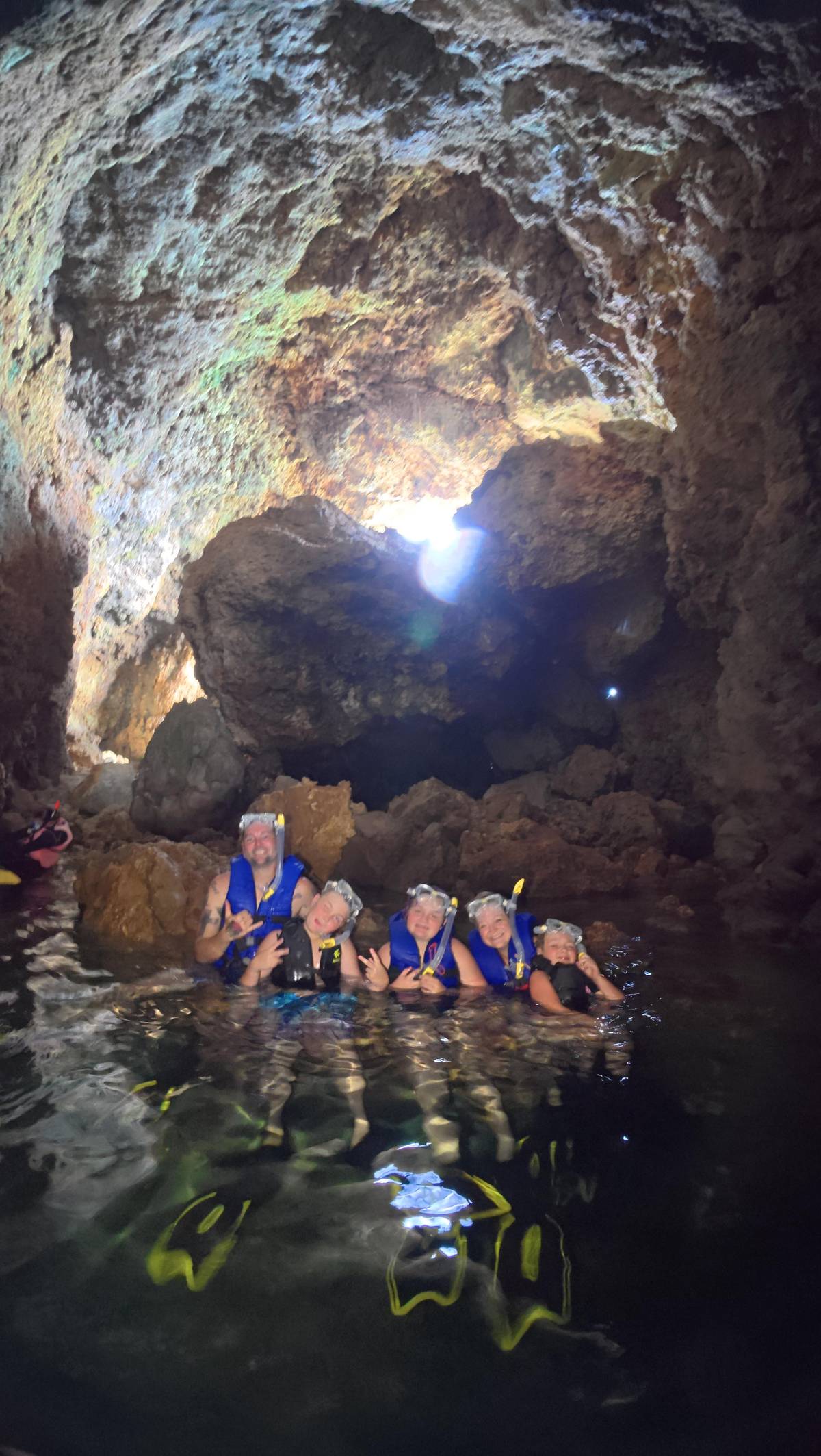 Warm and calmer
October and November
The average sea temperature ranges from around 21 degrees Celsius in February to nearly 30 in August, making it possible to enjoy marine activities throughout the year.
Take the Okinawa snorkeling season one stretch at a time. From January to March the sea is at its coolest, and humpback whales visit the Kerama Islands from late December to early April.9 From February to the end of March they can sometimes be seen off Cape Maeda itself.23
Spring brings warmer water and the beaches open, many of them in March.8 Then the rains arrive: the Japan Meteorological Agency's normal puts the start of Okinawa's rainy season around 10 May and the end around 21 June.3 The bureau says it rarely rains all day, but sudden showers are common.4
Summer is hot, busy and stormy. The habu jellyfish advisory runs from June to September, and typhoons are possible from June through September.64 Autumn keeps the warm water and the typhoon risk fades: the normals give 1.1 approaching typhoons in October and 0.3 in November.5
Checklist
Price check
Choose a trip and the number of people
Total from$84
per guest from $42
Check availabilityfree cancellationThe sum multiplies a listing's starting GetYourGuide price by the number you pick and converts it at today's European Central Bank rate; the exact total shows when you book.
Video
The video only loads from YouTube once you press play.
Typhoons are the biggest variable of a summer trip. The Japan Meteorological Agency's 1991 to 2020 normals count typhoons that come within 300 km of an Okinawa observatory, with 0.6 in June, 1.5 in July, 2.2 in August and 1.9 in September, and 7.7 in an average year.5 None are counted from January to March.5
A typhoon nearby closes the sea long before it arrives. The Cape Maeda facility may close for a typhoon, and its rules ban swimming during high-wave warnings.2425 Ferries to the Keramas can change their timetable for typhoons, strong wind or big swell.26
The rainy season is a smaller worry for snorkelers: you are wet anyway. Rain alone does not stop this site's tour, which runs in rain if the sea is safe. What matters is the wind and the waves. Watch the forecast for those, and book with free cancellation so a bad week costs you nothing.
The best time to visit Okinawa for snorkeling depends on what you value most. For the warmest water, July to September have the highest sea temperature normals, around 28.5 to 29.1 °C at mid-month.161521 You pay for it with typhoon risk, jellyfish and crowds.
Crowds peak in summer. This site's tour operator describes June to the end of September as the busy season and names its 7:00 AM and 9:00 AM slots as the way around the queue. Ferries to the Keramas get very crowded from June to October, and in Golden Week.27
For a balance, look at late spring before the rains and at October and November. The sea is still warm then, around 26.9 °C in mid-October, the typhoon normals are falling and the jellyfish advisory has ended.1056 Winter is for whale watchers and anyone happy in a wetsuit.
Okinawa issues its Habu Jellyfish Outbreak Advisory each year for June to September, when stings are most frequent.6 In 2025 habu jellyfish caused 81 of the 199 stings and bites by dangerous sea creatures that the prefecture recorded.28 The bureau adds that box jellyfish are usually seen between May and October.29
Prevention is simple: cover your skin, swim inside the nets where a beach has them, and carry vinegar.30 A wetsuit helps on all counts, and this site's tour includes one. If you are stung, get out calmly, pour vinegar on the sting, remove the tentacles, cool the skin and see a doctor.31
Outside those months the risk does not vanish, but it drops. Late autumn and winter snorkelers face cooler water instead, and a full set of neoprene makes both problems smaller. Whatever the month, ask your guide what has been seen in the water that week; local crews know their stretch of water better than any notice, and a short chat at the car park is a useful forecast in itself.
Daylight shapes how much you can fit in. Daylight lasts about 13.8 hours at mid-June and about 10.5 hours at mid-December.7 The facility's car park opens at 7:00 all year, so an early start is possible in every season.32
The facility closes earlier in winter. From December to March its toilets and showers close at 18:00, against 18:30 from April to November.33 Plan winter afternoons accordingly, and keep the snorkel for the morning, when the light in the cave is good and the crowds are thin. A winter visit also leaves time for the observation deck, where you can look over the clear water without getting wet.34
Rain days are spread through the year. The normals for Naha count between 8 and 12 rainy days a month of 1 mm or more, with 12 in August and 8 in November.7 For a snorkel, the state of the sea matters more than the rain.
Plan your snorkel
A private instructor, the gear and your photos, at Cape Maeda in Onna.
Yes, with a wetsuit. The bureau says you can snorkel year round; the sea normal in mid-February is about 21.4 °C.112
In August. The normal for mid-August is about 29.1 °C.15
From about 10 May to 21 June. That is the Japan Meteorological Agency's 1991 to 2020 normal for Okinawa.3
Mostly July to October. August averages 2.2 approaching typhoons, September 1.9.5
June to September. Okinawa's habu jellyfish advisory covers those months.6
Late December to early April. Humpbacks visit the Kerama Islands in those months.9
Many in March. The bureau says many popular resort beaches open for swimming in March.8
Sources
Keep reading
 Okinawa snorkeling tours compared: the Blue Cave, boats and the Kerama day trips
 Okinawa snorkeling spots: Cape Maeda, the reefs of the main island and the islands offshore
 Blue Cave Okinawa entrance: down the cliff stairs or in by boat
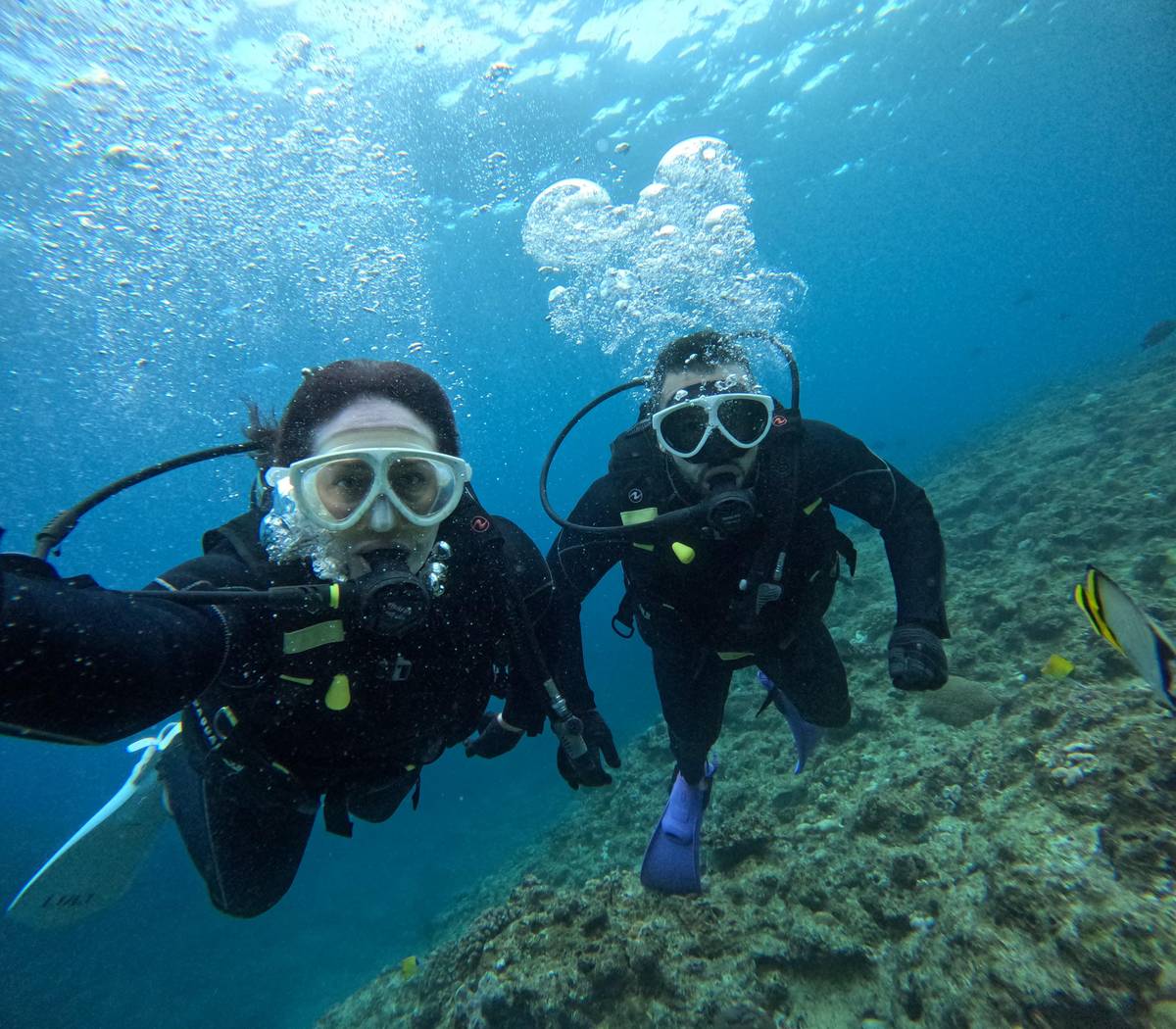 Blue Cave Okinawa diving: try dives, fun dives and freediving at Cape Maeda