 Calm beach or refund
Private snorkel
This site's tour
- Rain
- Runs if the sea is safe
- High waves
- May move to a calm beach
- Price
- from $44
Guides
Language
EnglishCurrency
US dollar · $GetYourGuide shows prices in the currency you choose.
Guide · Safety
Blue Cave Okinawa conditions change with every swell and every wind shift. Here is how the facility at Cape Maeda tells you whether you may swim, why it closes, and what official safety figures say about snorkeling.
Editorial team, bluecaveokinawasnorkeling.comUpdated October 25, 2026about 6 min to read37 sources
Quick answer
Is the Blue Cave in Okinawa open today? The facility at Cape Maeda answers that on its sea-conditions page, which shows a live video of the water and the current swimming status.1 Check it on the morning you plan to go, and again before you leave the car: the status can change as the wind picks up.
The answer depends on the sea, not on the calendar. The facility's rules ban swimming in bad weather and while high-wave or tsunami warnings are in force.4 When the management office closes the stairs to the water because of severe weather or bad sea conditions, no swimming is allowed at all.3
The facility itself also closes. It shuts on January 1, 2 and 3 and may close temporarily for a typhoon or another emergency.7 When a high-wave warning was in force, it closed both the car park and the facility.8 Nobody, this site included, can promise you that the cave will be open on a particular day.
On the morning
At home
Open the facility's live video and status.1
Warnings
No swimming while they are in force.4
At the cape
Four levels from swim to tsunami warning.2
Stairs
Closed stairs mean no swimming.3
In the water
Every snorkeler, every time.5
The facility signals the status of the sea with flags in four levels: OK to swim; OK to swim only with diving companies or instructors; no swimming; and tsunami warning, no swimming.2 The second level matters for visitors: on those days you may only go in with a guide or an instructor.
At the caution level, the facility asks swimmers to wear a protective suit and a life jacket and to swim carefully within their own skills.1 It asks every snorkeler to wear a life jacket or a buoyancy belt in any case.5 A wetsuit and a life jacket are part of this site's tour.
Whatever the flag, the facility is clear about responsibility. It manages only the property and is not responsible for water accidents; guests take full responsibility for their own acts.9 Take the flags seriously, and swim with someone who knows the site.
The flags
If the cave closes
Calm beach or refundThis site's tour
 Your choice
Ages 5 to 58
 Alternative site
Pickup included
Decision helper
Match your plan to the status
Cape Maeda is not a swimming beach. The tidal movement is rapid and can be dangerous. Proceed with extra caution during low and high tides.
Cape Maeda is not a beach. The facility states that it is not a swimming beach, that the tidal movement is rapid and can be dangerous, and that extra caution is needed at low and high tide.15 The prefectural police add that Okinawa faces the open ocean on all sides and takes the tidal currents, waves and wind directly.16
The tourism bureau explains the currents to watch for. Rip currents flow from the shore out to sea, can be 10 to 30 meters wide and move at up to 2 meters per second; you escape one by swimming parallel to the shore.17 Down currents can form at reef ends with steep drop-offs, and divers and snorkelers should be especially careful of them.18
Inside the cave there is a man-made risk too. The facility reports an increase in people jumping from the cliff walls inside the cave into the sea, which it calls extremely dangerous to everyone swimming, snorkeling or diving there.19 Jumping into the water near the cape and in or near the Blue Cave is banned.20
Checklist
Price check
Choose a trip and the number of people
Total from$84
per guest from $42
Check availabilityfree cancellationThe sum multiplies a listing's starting GetYourGuide price by the number you pick and converts it at today's European Central Bank rate; the exact total shows when you book.
Video
The video only loads from YouTube once you press play.
People searching for a Blue Cave Okinawa accident usually want to know how risky snorkeling here is. The official figures cover larger areas than the cape. The prefectural police counted 114 water accidents in 2025, with 135 people involved and 51 deaths, as provisional figures.21 To the end of September 2026 they counted 93 accidents and 20 deaths.22
The Naha Coast Guard Office looks at marine leisure in its own area. In 2025 it recorded 32 people injured or killed, 5 of them killed, and tourists made up 24 of the 32.23 Snorkeling accidents rose to 14 people, 5 more than the year before, and 5 of them died.10 Of those 5 deaths, 4 happened while snorkeling in the Kerama Islands.24
The same report also looked at life jackets. Of the 14 people in snorkeling accidents, 7 wore a life jacket and 7 did not, and 80% of those who died were not wearing one.11 The police add that people aged 50 and over make up 60% of water-accident deaths in Okinawa.25
The prefectural police ask snorkelers to wear a set of 4: mask, snorkel, fins and a life jacket, and to snorkel floating on the surface.26 They warn that misusing the snorkel, for example swallowing seawater, causes many accidents among residents and tourists alike.27 A life jacket or buoyant wetsuit keeps you afloat, makes breathing easier and saves your strength.28
Never go alone, and never lose sight of your partner.29 Do not go into the sea after drinking alcohol or when you feel unwell.30 The tourism bureau adds its own list: know how to use your equipment, stay informed about the sea, keep each session short so you do not tire, and stay sober.31
Choose your operator with care. Under Okinawa's water safety ordinance, snorkeling businesses must notify the Public Safety Commission, and the police ask users to check that their operator has done so.32 This site's tour includes insurance and a private instructor for your group.
Okinawa issues a Habu Jellyfish Outbreak Advisory every year for June to September, when stings are most frequent; in 2026 it ran from June 1 to September 30.13 In 2025 the prefecture recorded 199 stings or bites by dangerous sea creatures, 81 of them, about 40.7%, by habu jellyfish.33
Prevention is simple. Cover as much skin as you can, swim inside the jellyfish nets on beaches that have them, and bring vinegar.14 If you are stung, leave the water calmly, do not scratch, pour vinegar over the sting, cool it with ice or cold water once the tentacles are off, and see a doctor.34
The tourism bureau also warns of box jellyfish, usually seen between May and October and sometimes in water just 50 centimeters deep.35 A wetsuit, like the one included on this site's tour, covers much of your skin; keep it zipped all the way up.
Plan for a closed day. This site's tour runs in rain if the sea is safe, may switch to a calm beach if high waves close the Blue Cave, and refunds you in full if the operator cancels for weather. Free cancellation up to 24 hours before also lets you move the day yourself when the forecast turns.
Other trips handle closures differently. One boat trip goes to an alternative snorkeling or diving site without a refund when wind restricts the cave. A small-group trip from Maeda offers another point or a full refund if you prefer not to join it. Read that line before you book.
Typhoons are the big variable. The bureau says there is a chance of typhoons from June through September, and the Japan Meteorological Agency's normals give August the most approaching typhoons, 2.2 on average.3637 In that season, keep a spare morning and watch the sea-conditions page.1
Plan your snorkel
A private instructor, the gear and your photos, at Cape Maeda in Onna.
Check the facility's sea-conditions page. It shows a live video and the current swimming status.1
Four levels of permission. Swim; swim only with a dive company or instructor; no swimming; tsunami warning.2
Swimming does. Swimming is banned in bad weather and during high-wave or tsunami warnings.4
The facility asks you to. Every snorkeler should wear a life jacket or buoyancy belt.5
118. It connects you with the Japan Coast Guard.6
June to September. Okinawa issues its habu jellyfish advisory for those months.13
It may move or be refunded. This site's tour may switch to a calm beach, and refunds in full if the operator cancels for weather.
Sources
Keep reading
 Okinawa snorkeling tours compared: the Blue Cave, boats and the Kerama day trips
 Okinawa snorkeling spots: Cape Maeda, the reefs of the main island and the islands offshore
 Blue Cave Okinawa entrance: down the cliff stairs or in by boat
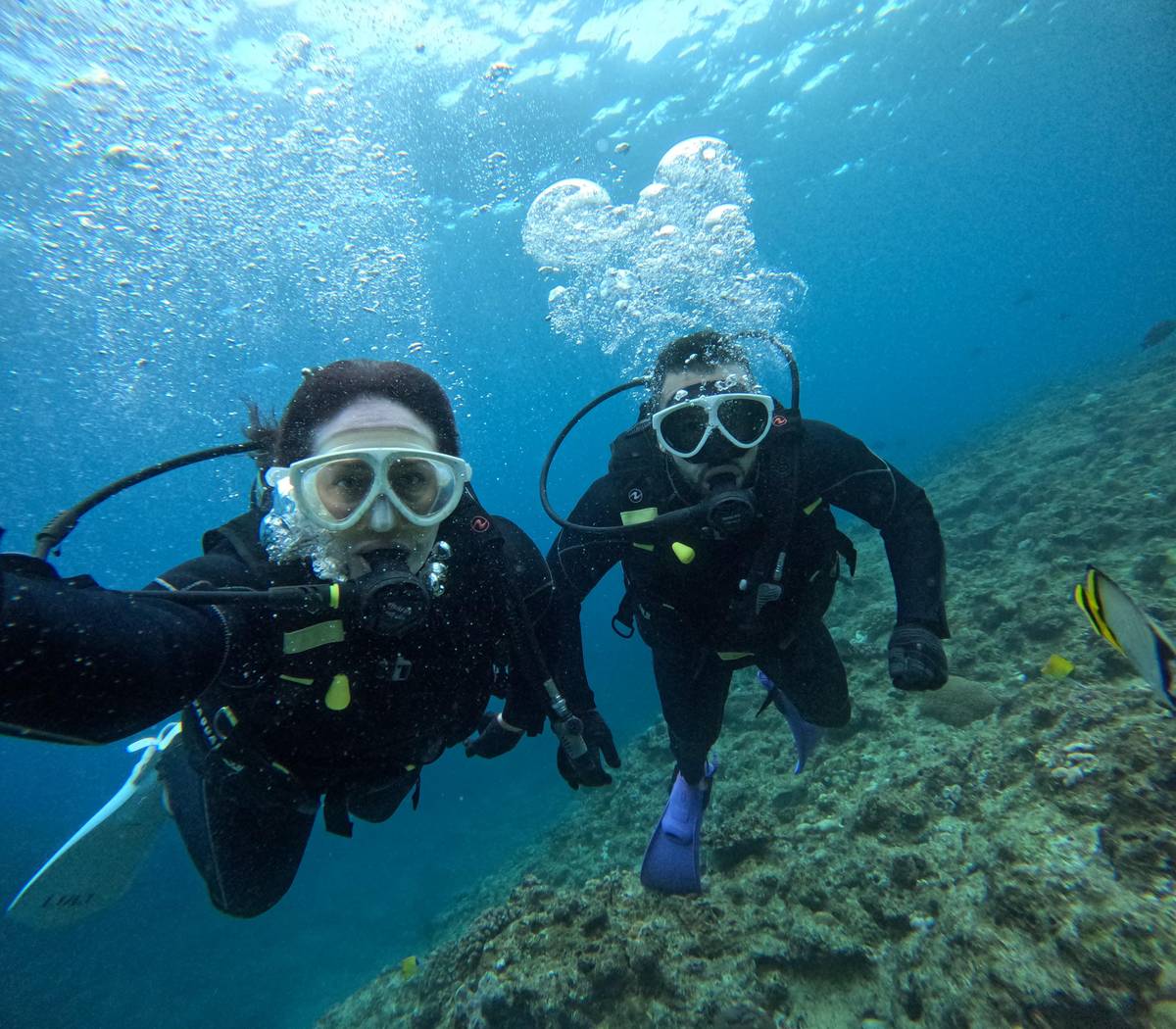 Blue Cave Okinawa diving: try dives, fun dives and freediving at Cape Maeda